| |
In this issue...
- Future Homes Standard announcement- Solar PV, heat pumps and more
- New Fire Risk Assessment guidance
- The latest guidance from the Building Safety Regulator
- Updated HRB definitions
Plus: Design for wellbeing... Residential PEEPs... Holiday reading...
|
| |
|
|
| |
|
THE NEW ROLE OF BUILDING CONTROL
|
| |
|
|
| |
|
|
| |
|
|
|
| |
|
|
| |
|
SOCOTEC Building Control's Andrew Cammarano explains the role of Building Control after the introduction of the Building Safety Act.
Click the video above to watch now!
Make sure you're subscribed to our YouTube channel to receive notification of our videos.
|
| |
|
|
| |
|
|
|
|
|
| |
|
THE FUTURE OF BUILDING CONTROL
|
| |
|
A call for evidence has been undertaken following the publication of the Building Control Independent Panel's Terms of Reference and 'problem statement’. It was open for responses from 29 July to 29 August, and the independent panel will now consider the evidence collected to inform a report and recommendations to Government later in the year.
The Grenfell Tower Inquiry final report, published on 4 September 2024, recommended an independent panel was set up to consider two questions relating to the operation of the Building Control system in England - whether to remove commercial interest from the system and whether certain functions should be moved to a 'national authority' model.
Results are expected on 30 October 2025 and feedback is expected on 30 November 2025.
|
| |
|
|
| |
|
|
|
|
| |
|
FUTURE HOMES: Government announces regulations for ‘rooftop revolution’ and planning for more heat pumps
|
| |
|
Ahead of the autumn publication of the Future Homes Standard (FHS), Energy Secretary Ed Miliband has announced that it will include Building Regs changes to ensure that new-build homes will have solar panels by default, in what he termed “a monumental step in unleashing this rooftop revolution as part of our Plan for Change.” On 29 May, changes to permitted development rights also made it easier to obtain Planning consent for domestic heat pumps. We’ve outlined what details we now know about the FHS.
|
| |
|
|
| |
|
|
|
|
| |
|
FUTURE HOMES: Net Zero Transition Report
|
| |
|
In April, the Future Homes Hub* launched the New Homes Sector Net Zero Transition Plan, a shared pathway for decarbonising new homes consistent with delivering on the Government’s 1.5m new homes target. Developed together by the sector and the Carbon Trust, and drawing on homebuilder net zero plans, the Government’s Carbon Budget Delivery Plans, and other sources, the plan aims to improve long-term certainty for, and provide a structure for collaboration between, developers and their supply chains.
In March, the Hub released their ‘Embodied and Whole Life Carbon of FHS Options’ report.
|
| |
|
|
| |
|
|
|
|
| |
|
FIRE SAFETY: New Standards for Fire Risk Assessments and Assessor Competence
|
| |
|
The British Standards Institute (BSI) published BS 9792, a new Code of Practice on Fire Risk Assessments for Housing on 1 August this year, and on 15 August, it also released BS 8674, a new Code of Practice for the competence of individual fire risk assessors.
|
| |
|
|
| |
|
|
|
|
| |
INCLUSIVE DESIGN: Health & Wellbeing
|
| |
|
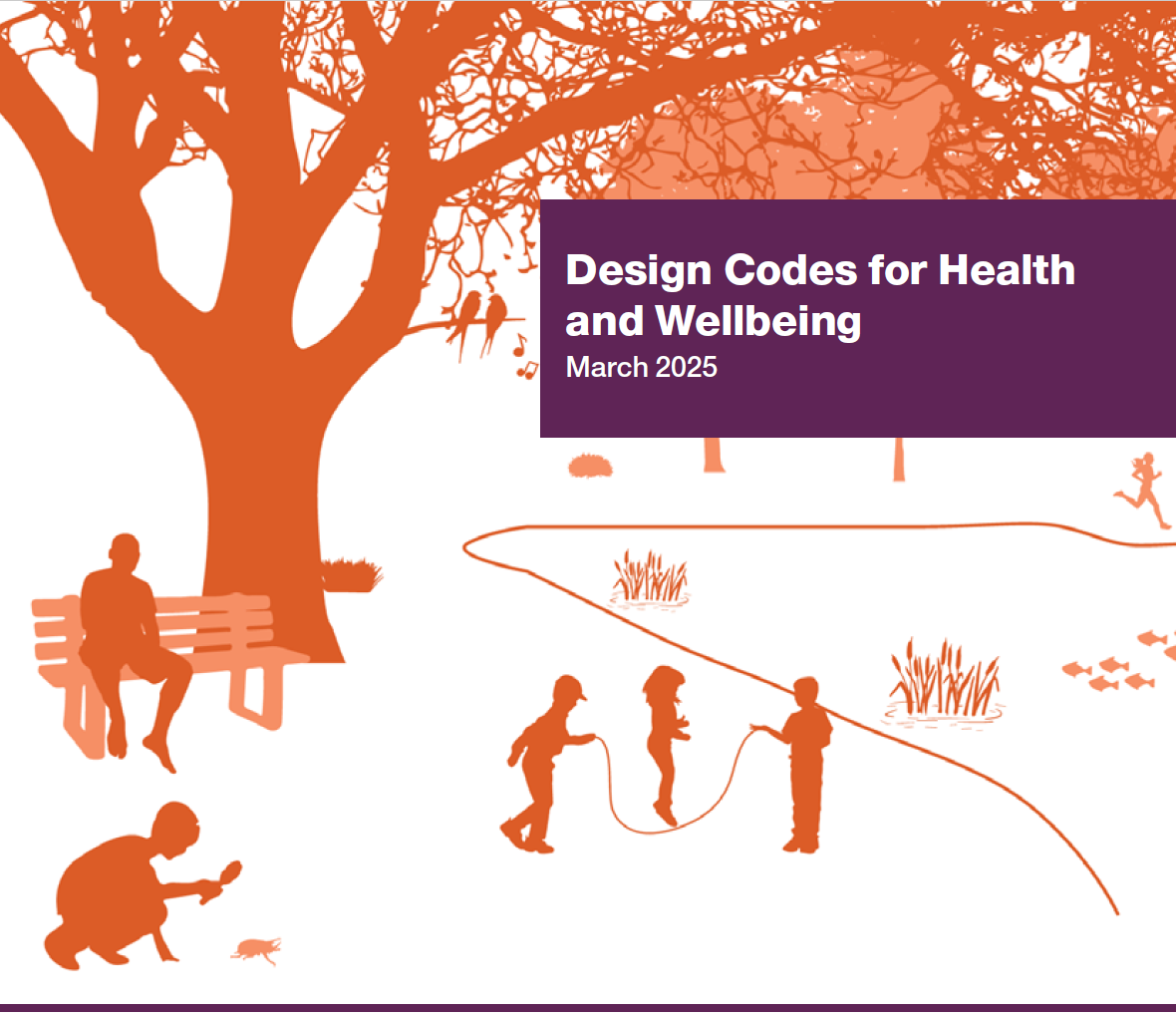
The Quality of Life Foundation has just published new guidance, ‘Design Codes for Health and Wellbeing’. It provides practical advice for embedding health and wellbeing into the design coding process, ensuring that places support healthier lives for everyone.
Why design codes matter
Design codes set expectations for the design of buildings, spaces, and places. They help create high-quality developments by providing a structured framework that Planning authorities, developers, and communities can use to shape future growth. By prioritising health and wellbeing within design codes, we can:
• Address local health priorities through better urban design.
• Reduce health inequalities by improving access to green space, active travel, and healthy food.
• Create certainty for developers and decision-makers, ensuring that health-focused placemaking becomes standard practice.
|
| |
|
|
| |
|
|
|
|
| |
|
BUILDING SAFETY REGULATOR: Updated guidance and case study from the BSR
|
| |
The Building Safety Regulator (BSR) has just published improved guidance relating to higher-risk buildings (HRBs). View the links on our website for topics including:
- Building Control approval for higher-risk buildings
- Preparing information for a Building Control approval application
- Making changes to an HRB project
- Applying for a completion certificate
- Building Assessment Certificates
|
| |
|
|
| |
|
|
|
|
| |
BUILDING SAFETY REGULATOR: New Gateway 2 videos
|
| |
|
The BSR has just published a series of videos where Philip White, BSR’s Chief Inspector of Buildings, shares insights into Gateway 2 – the pivotal stage in Building Control for higher-risk buildings (HRBs) in England.
The videos and accompanying article explain the rigorous new application process and the need for higher-quality applications to ensure resident safety and avoid costly future issues.
|
| |
|
|
| |
|
|
| |
|
BUILDING SAFETY CAMPAIGN:
Do you know your BSRs from your PGOs?
|
| |
|
GOV.UK’s Building Safety Campaign website now has a useful A to Z glossary of commonly used Building Safety terms, including all the latest acronyms. Try these around the office:
FRAEW? ICC? PAP? VOR?
|
| |
|
|
| |
|
|
|
| |
|
OUR YOUTUBE CHANNEL
|
| |
|
240,000 video views…over 2,300 subscribers…
Over 6,000 hours of CPD delivered this year!
“… FAR AND AWAY THE BEST BUILDING REGULATIONS CHANNEL ON YOUTUBE…”
|
| |
|
|
| |
|
|
|
|
|
| |
|
BUILDING SAFETY REGULATOR: A new governance structure
|
| |
|
The UK Government has announced changes to the Building Safety Regulator's (BSR) governance structure as a step toward establishing a single construction regulator, addressing key recommendations from the Grenfell Tower Inquiry.
Former London Fire Brigade Commissioner Andy Roe KFSM has been appointed as non-executive chair of a new MHCLG board that will work toward assuming BSR functions.
Two new operational units have been introduced:
· Innovation Unit: Designed to streamline approvals for approximately 30,000 new homes in high-rise buildings currently in the application pipeline
· Remediation Enforcement Unit
These governance changes build on the foundation established by HSE, with no alterations to existing building safety regulatory processes or legal requirements. BSR operations continue as usual.
|
| |
|
|
| |
|
|
|
|
| |
HRBs: Updated Government guidance on roof gardens
|
| |
|
Guidance has been updated on 28 May 2025 to include an updated notice clarifying the Government’s position following the First-tier Tribunal decision dated 3 July 2024 on roof gardens being considered a storey.
The guidance covers criteria in relation to 3 scenarios: occupation, building work to an existing building and construction of a new building.
|
| |
|
|
| |
|
|
| |
|
|
|
|
|
|
| |
|
Work to an Existing Building
|
| |
|
|
| |
|
|
|
|
|
|
|
|
| |
|
| |
|
FIRE SAFETY: Residential PEEPs for Vulnerable People
|
| |
|
The latest updates on the Government’s progress on the Grenfell Tower Inquiry’s Phase 2 recommendations and updates on Phase 1 recommendations includes a requirement for building managers and owners of residential buildings to engage with Vulnerable People in the drafting of Residential Personal Emergency Evacuation Plans (PEEPs) .
It states: ‘Residential Personal Emergency Evacuation Plans (PEEPs) will mandate that the building owner or manager:
• engages with their vulnerable residents
• considers how to improve their fire safety and evacuation
• enables all residents to understand what they should do in the event of a fire
• gives fire and rescue services information in case they need to support their evacuation
• mandates building-level evacuation plans for these buildings’
|
| |
|
|
| |
|
|
|
| |
|
|
| |
|
We're pleased to announce Adam Radmall's well-deserved promotion from Regional Manager of our Chelmsford office to Regional Director for Region 6, covering Cambridge, Chelmsford, Colchester, London & Rainham.
Adam joined us when we opened our Chelmsford office in September 2021 and has consistently demonstrated strong leadership and commitment to excellence. His progression to this new role reflects his hard work and dedication over the past few years.
We congratulate Adam on this achievement as he progresses in his career and takes on broader responsibilities across region 6. We're looking forward to his continued success in this new chapter!
|
| |
|
|
| |
|
|
|
| |
|
Was this email forwarded to you?
|
| |
|
JOIN OVER 32,500 SUBSCRIBERS
‘The essential newsletter to keep up with and understand the world of Building Regs…’
Sign up to get the latest news and updates sent directly to your inbox.
|
| |
|
|
| |
|
|
|
| |
|
Future Homes Standard:
Getting Ahead on Energy Efficiency
|
| |
There's an ongoing shift in the regulatory landscape in the UK when it comes to energy efficiency, namely the upcoming Future Homes Standard (FHS).
When the FHS consultation launched in 2023, it was expected that the Home Energy Model (HEM) would be the sole compliance tool. However, following feedback from industry the government has opted to allow a new updated SAP 10.3 version to be used as an interim methodology.
It will now feature a new notional dwelling, updated carbon and primary energy factors, and refinements to the current SAP 10, to support compliance with the FHS, thus ensuring more energy efficient homes will be delivered.
In short, this means both SAP 10.3 and HEM can be used during a phased transition - the timelines of which will become clearer once the FHS regulations are laid before Parliament.
But how can companies get ahead and prepare for the FHS? Key focus areas include regulatory compliance, energy efficiency optimisation, and occupant comfort. Specialised building physics assessments are essential for regulatory compliance.
Overheating Analysis
Dynamic thermal modelling can be used to evaluate potential overheating risks, according to CIBSE TM59/TM52 standards. This helps identify vulnerable areas with evidence-based recommendations for temperature management, while solutions generally look at balancing comfort requirements with energy efficiency considerations.
Water Calculations
Technical water consumption forecasting aligned with regulatory standards supports efficiency evaluations to meet sustainability requirements. This can include technical analysis of rainwater harvesting and the possibility of greywater recycling.
Excess Glazing Assessment
Through technical analysis, the benefits of natural light usage in buildings can be balanced against thermal performance. Similarly, shading strategies can be evaluated, as well as thermal bridging identification – alongside solar gain analysis and G-value optimisation.
These specialised assessments complement core energy assessment capabilities, including Part L compliance certification, as-built verification testing, and thermal performance calculations – all designed to fit within current regulations and prepare for the transition to the FHS.
It is critical to support building projects throughout their entire lifecycle through technical expertise and analytical services, to ensure buildings can both fully utilise their lifespan as well as comply with the latest regulations.
|
| |
|
|
| |
|
|
|
|
|
| |
|
GOING OUT- Art in Manufacturing
|
| |
|
What happens when globally renowned artists trade studios for the clatter of machines, industrial dyes, and production lines? At the National Festival of Making in Blackburn, the result is a bold, joyful, and often surprising collision of creativity and craft. Now in its ninth year, the festival's flagship commissioning programme, Art in Manufacturing, has announced three major new residencies for 2025.
|
| |
|
|
| |
|
|
| |
|
And Finally...
HOLIDAY READING: Beside the seaside and hot dog stands...
|
| |
|
|
| |
|
|
| |
|
|
|
|
|
| |
|
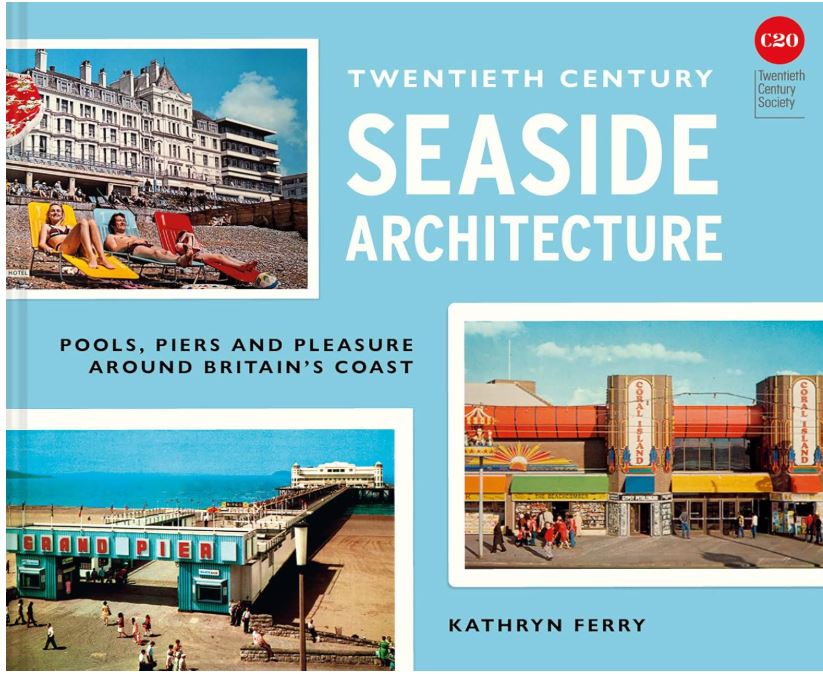
Stroll along the prom, prom, prom: Twentieth Century Seaside Architecture
|
| |
|
Discover a nostalgic exploration of Britain’s distinctive and architecturally significant seafront buildings from the 1920s to the new millennium.
British seaside resorts enjoyed phenomenal popularity for much of the twentieth century. Told chronologically, this book is the first look at how resort architecture around the UK coast kept pace with changing fashions and the increasing competition of foreign destinations.
Using vintage postcard images, Kathryn Ferry showcases the inherent playfulness of seaside architecture as it evolved from interwar classicism, through art deco and international modernism, to Festival of Britain-inspired mid-century style, then later to seafront tower blocks and the artificial beaches of 1970s leisure centres. Featuring a wide range of building types, Twentieth Century Seaside Architecture explores everything from beach huts and bandstands to lidos, piers, theatres, hotels and amusement arcades.
Published May 2025
From around £15
|
| |
|
|
| |
|
|
|
|
| |
|
Zapiekanka anyone?
Kiosk
|
| |
|
Mass-produced from the 1970s to the 1990s, modular kiosks like the seminal K67, designed by the Slovenian architect Saša J. Mächtig, and similar systems, including the Polish Kami, the Macedonian KC190, and the Soviet “Batyskaf”, could be found everywhere from bustling city squares to socialist-era housing estates throughout the former Eastern Bloc and ex-Yugoslavia countries. They served as hot dog and Polish zapiekanka joints, farm egg and rotisserie chicken vendors, funeral flower shops, newsstands, car park booths, currency exchange offices, and more.
Containing over 150 captivating photographs featuring more than 100 kiosks – from Ljubljana to Warsaw and from Belgrade to Berlin – this book provides previously unseen documentation of the remaining modernist booths that witnessed the transformation of Central and Eastern Europe at the end of the 20th century. While some remain active or have undergone refurbishment, others have been abandoned or have slowly faded from the urban landscape.
The photographs in this unique collection were taken over the last decade by Zupagrafika’s founders, David Navarro and Martyna Sobecka. It is accompanied by an introduction offering invaluable insight into the history of these mobile structures.
Published June 2024
From around £20
|
| |
|
|
| |
|
|
|
|
| |
|
Big dippers: Lido
|
| |
|
A celebration of outdoor swimming – looking at the history, design and social aspect of pools.
Few experiences can beat diving into a pool in the fresh air, swimming with blue skies above you. Whether it's a dip into a busy and bustling city pool on a sweltering summer day, or taking the plunge in icy waters, the lido provides a place of peace in a frenetic world.
The book begins with a history of outdoor pools – their grand beginnings after the buttoned-up Victorian era, their falling popularity in the 20th century, and the newfound appreciation for the outdoor pool, or lido, and outdoor swimming in the 21st century.
Journalist and architectural historian Christopher Beanland picks the very best of the outdoor pools around the world, including the Icebergs Pool on Bondi Beach, Australia; the 137m seawater pool in Vancouver, Canada; Siza's concrete sea pools in Porto, Portugal; the restored art deco pool in Saltdean, UK, and the pool at the Zollverein Coal Mines in Essen, Germany. The book also features lost lidos and the fascinating history behind the architecture of the pools, along with essays on swimming pools in art, and the importance of pools in Australia. In addition, there are interviews with pool users around the globe about why they swim. The book is illustrated throughout with beautiful colour photography, as well as archive photography and advertising.
Published 2020
From around £15
|
| |
|
|
| |
|
|
|
|
| |
|
City break: South Bank
|
| |
|
Architecture and design specialist Dominic Bradbury draws back the curtain on the iconic South Bank, providing an unrivalled insight into the buildings that populate one of London’s epicentres of art and entertainment.
Encompassing an art gallery, theatres, festival halls and a cinema, the South Bank is a cultural hub in the heart of London. South Bank: Architecture & Design is a beautifully crafted celebration of its sublime, community-focused architecture. The book opens with an origin story, unravelling the evolution of this riverside enclave since the 1951 Festival of Britain catapulted it onto the scene and exploring the renowned architects and designers that have shaped this space throughout the mid-century and beyond.
Much of the book is devoted to the buildings themselves, all of which are accompanied by Bradbury’s authoritative text and richly illustrated with photography by Rachael Smith. The buildings include:
• Royal Festival Hall
• Hayward Gallery
• Queen Elizabeth Hall and The Purcell Room
• National Film Theatre/BFI
• National Theatre
Published October 2024
From around £26
|
| |
|
|
| |
|
|
|
|
|